

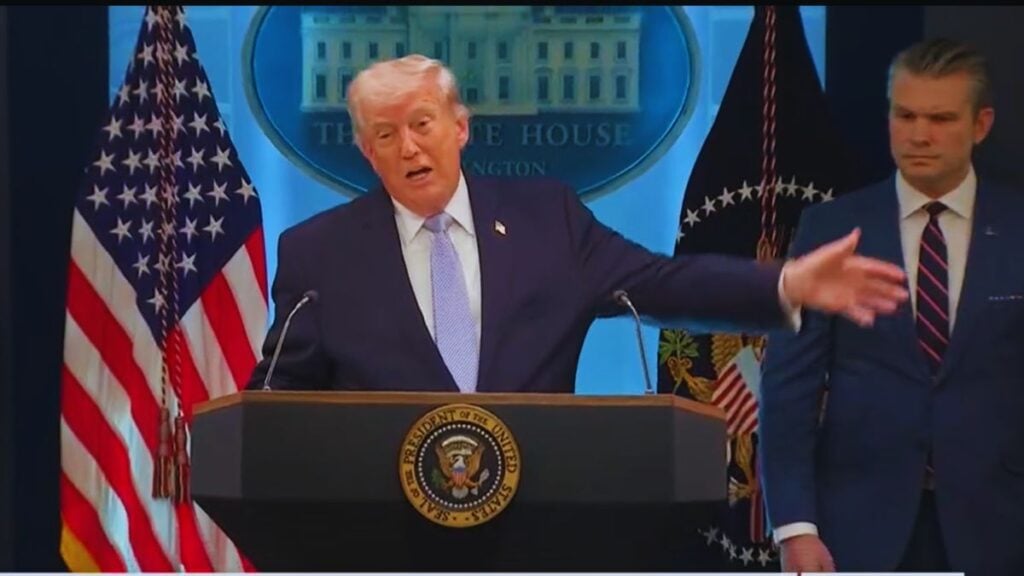
Donald Trump stood at the White House podium on Monday and said the quiet part into a microphone. After reporters covered the fact that a second U.S. airman was still missing in Iran, Trump said his administration would go to the media company, invoke national security, and tell it to “give it up or go to jail.”
Not the leaker. The reporter.
That single redirect changes everything about this story. This is not another Trump-yells-at-media episode. This is a president saying, on camera, that a newsroom should be coerced into burning a source or face criminal consequences. That is not a tantrum. That is a policy position.
He Wants Credit for the Rescue and Silence About How We Got There
Here is what makes the threat land even harder. Trump spent the same briefing celebrating the successful rescue of two downed airmen. He recounted the operation in detail. He wanted cameras rolling for that part. The administration wants the heroism clip and the secrecy threat in the same press conference, which tells you the secrecy was never really about protecting lives. It was about controlling who gets to describe what happened.
If the reporting had been fabricated, the White House could just say so. It was not fabricated. The airman was missing. Reporters reported it. Trump’s problem is not inaccuracy. His problem is that someone told the press before the White House wanted them to know.
This Is Not One Bad Quote. It Is a Sequence
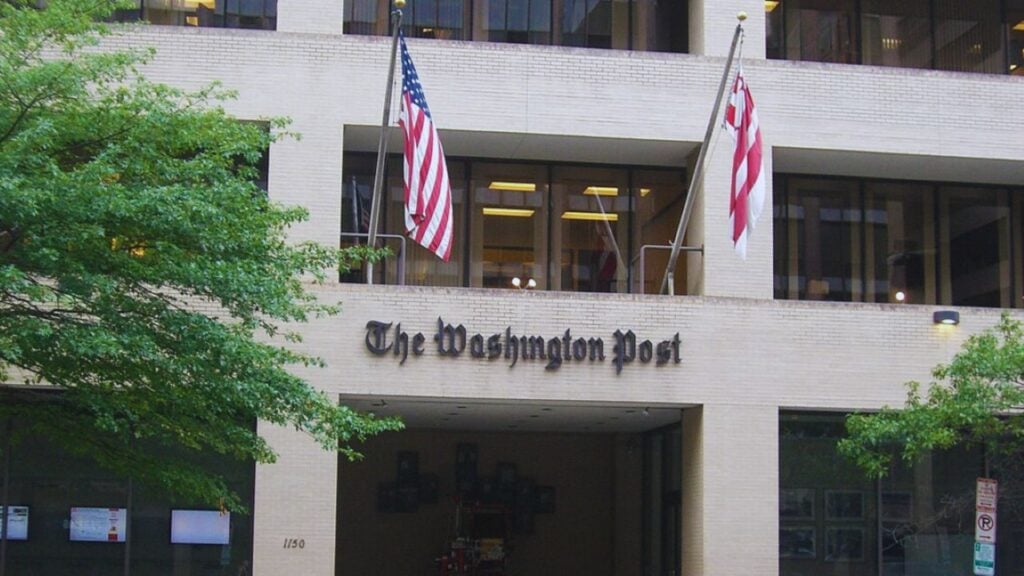
Pull back and the pattern gets ugly fast. In April 2025, Pam Bondi’s Justice Department reversed a Biden-era policy that had shielded reporters from subpoenas in leak investigations. Prosecutors can now compel journalists’ records and testimony far more easily. In January, FBI agents searched Washington Post reporter Hannah Natanson’s home and seized her devices. A federal judge had to step in a month later to block prosecutors from digging through them unsupervised.
That is the DOJ side. On the regulatory side, FCC chair Brendan Carr warned broadcasters to “correct course” on Iran coverage before license renewals came up — which is the polite version of nice station you’ve got here. A judge ruled last year that the White House retaliated against the Associated Press over editorial decisions. Another judge blocked Pentagon restrictions on reporter access just last month.
Line all of that up next to a president publicly threatening jail for a newsroom that will not hand over a source, and you are not looking at a pattern of impulsive outbursts. You are looking at a government systematically testing how far it can push before the public stops caring.
The Leaker Is the Government’s Problem. The Reporter Is Yours
Governments can investigate leaks. They can prosecute officials who mishandle classified material. Nobody seriously argues otherwise. But what Trump described on Monday is not a leak investigation. It is a shakedown. Give us the source, or we’ll come after you. That turns the press into an arm of the investigators — which is exactly the relationship the First Amendment exists to prevent.
And this should not be a partisan objection. Conservatives who say they distrust state power should hear a president threatening to jail journalists and feel their neck hair stand up. Liberals who spent four years talking about democratic norms should recognize that this is one actually crumbling in real time, not in some hypothetical think-piece way, but at the podium, on camera, with the president’s own words as evidence.
The rescue succeeded. The airmen are safe. None of that retroactively makes it acceptable for a president to tell a newsroom: expose your source or face prosecution. Once that becomes normal during wartime, it never politely restricts itself to wartime. Every inconvenient story becomes a national security question. Every source becomes a liability. Every newsroom starts doing the math on whether the story is worth the legal threat.
Trump probably thinks this makes him look like a wartime leader protecting his troops. It makes him look like a man who wants the press to ask permission before telling the public what its own government is doing.
So pick a side. Should the government punish leakers through its own investigations — or should it be allowed to conscript journalists into doing the work for them?