

Image: Valve
Der Artikel kann nur mit aktiviertem JavaScript dargestellt werden. Bitte aktiviere JavaScript in deinem Browser und lade die Seite neu.
Valve has closed a Linux bug report with the line that “the current point release of ALVR is not supportable on SteamVR’s side”, and the release it means, ALVR v20.14.1, is 15 months old. kisak-valve, the Valve member account that triages the tracker, posted it at 22:18 UTC on October 14, three and a half minutes after the report was filed.

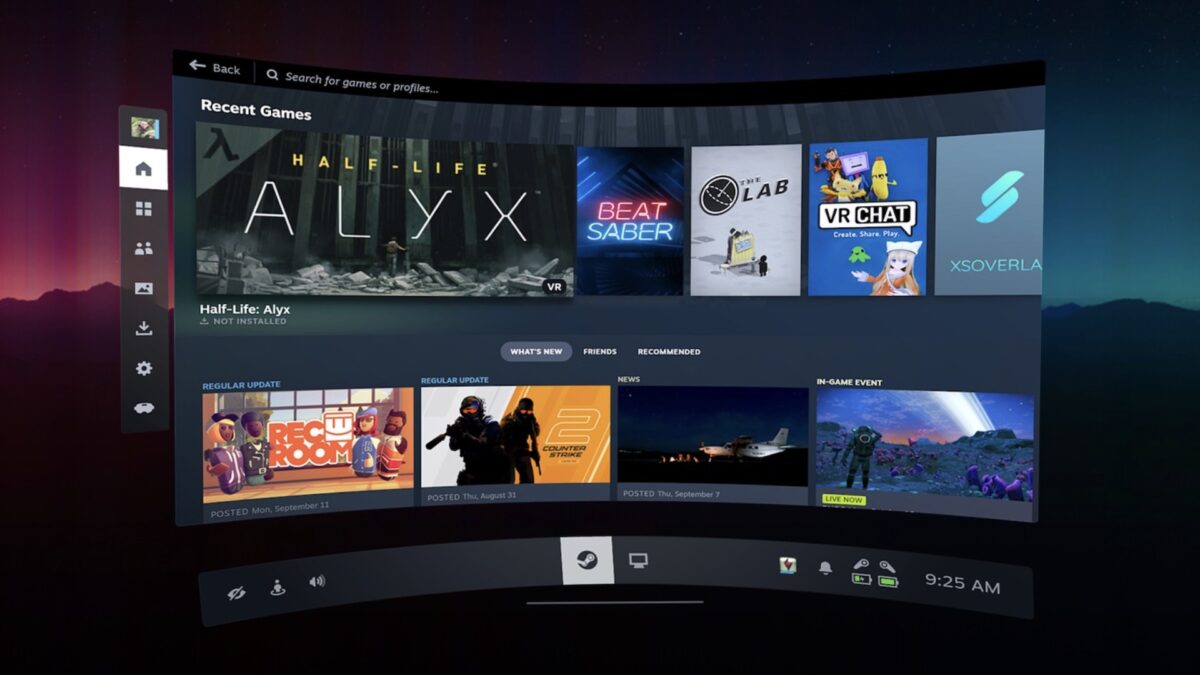
An image from Valve’s own SteamVR 2.17 announcement. The report it answered on October 14 was filed against SteamVR 2.16.6 and the 2.18.3 beta. Image: Valve
ALVR is the open-source app Quest and Pico owners use to stream PC VR from their own machine, and on Linux it is one of the alternatives to Valve’s own Steam Link VR driver. Its current release went up on July 14, 2025, with v20.14.0 in June 2025 before it and v20.13.0 in March of that year.
Valve’s words cover one release, not the app
Valve does not say ALVR is blocked, broken on purpose or unsupportable in future, and it has announced no change aimed at it. The scope is the current point release, on SteamVR’s side.
The explanation Valve points at is not Valve’s own account either. It is a June 25 comment by a contributor on the same tracker, arguing that ALVR “does not use normal SteamVR APIs” and instead “moves chunks of SteamVR out of the way and tries to replace them with its own things”, so anything that changes inside SteamVR can break it. A contributor’s reading is not a company statement, however authoritative it sounds.
The same report was about Valve’s own streaming driver
The owner who filed it had tested Steam Link VR, SteamVR’s built-in streaming driver, as well as ALVR: a Pico 4 over Ethernet, a GeForce GTX 1070 and Gentoo Linux. On SteamVR 2.16.6 the driver failed to create a Vulkan device with VK_ERROR_EXTENSION_NOT_PRESENT, and on the 2.18.3 beta the headset is detected but streaming dies with VK_ERROR_DEVICE_LOST, an Nvidia Xid 13 and a timeline synchronisation assertion in vrcompositor.
Valve’s second reply, 25 minutes later, sent that half somewhere else: it wrote “With ALVR taken out of the mix, then you’re most likely looking for the issue being tracked at #1005.”
That report was opened on October 10 by a GTX 1080 owner whose SteamVR beta session crashed, and it is open with four comments. Valve read the logs on it the same day and left it there: it wrote “In your vrcompositor.txt log, this looks like something for a SteamVR dev to ponder.”
The Pico 4 owner carried the Steam Link half over to that thread on October 15, reporting a headset that connects and then “stays on a black screen”. The owner who opened it had bowed out two days earlier, writing that buying an AMD card had been the fix.
Older Nvidia cards keep turning up in these reports. Valve removed a Vulkan extension requirement in the SteamVR 2.18.3 beta so that older driver branches would work, and the error the Pico 4 owner saw on 2.16.6 is the one that change was meant to clear, while a separate SteamVR Error -203 black screen on the same beta turned out to be a Vulkan ring buffer overflow.
Nothing has moved on the ALVR side of it. Issue #901, the older report where SteamVR and ALVR end in an error 303, has been open since June 3 with 27 comments, and the labels Valve has left on it still read bug and Need More Information.
Note: Links to online stores in articles can be so-called affiliate links. If you buy through this link, MIXED receives a commission from the provider. For you the price does not change.