

Tales of Xillia, originally launched decades ago for the PlayStation 3, stands as one of the more distinctive entries in Bandai Namco’s long-running JRPG franchise. Now, years later, the title is available to a new generation of players across several platforms through the remastered version. While it divides fans in certain design directions, its combination of rich character dynamics, fast-paced combat, and dual-protagonist storytelling gives it a memorable identity within the series. Although it doesn’t fully escape the limitations of its era, it offers a deeply engaging journey for players who value strong party chemistry, thematic depth, and energetic action RPG systems.

An Intriguing Fantastical Setting & Story
Set in the vibrant world of Rieze Maxia, where humans and spirits thrive together through the life-giving force known as mana, Tales of Xillia explores a society built on “spirit artes,” magic fueled by the very beings that sustain the land. The story sparks to life when Milla Maxwell, an enigmatic woman who proclaims herself the incarnation of the Lord of Spirits, infiltrates a secret military facility siphoning power from spirits. Her mission collides with the path of Jude Mathis, an idealistic medical student whose moment of curiosity pulls him into a conflict far bigger than himself. Mistaken for accomplices and branded enemies of the state, Jude reluctantly follows Milla on a journey that soon draws in a diverse cast of allies, each carrying personal burdens, ambitions, and reasons to fight. As their adventure deepens, the group uncovers a looming danger: Gaius, the formidable king of Auj Oule, whose vision of a unified Rieze Maxia may come at the cost of its freedom. Stopping his rise becomes the party’s ultimate test.
One of Tales of Xillia’s most unique features is the choice between two main protagonists: Jude Mathis, a medical student with a strong moral compass, and Milla Maxwell, the stoic incarnation of the Lord of Spirits. Though the bulk of the overarching narrative remains the same for both routes, each perspective reveals different scenes, motivations, and character moments. This dual narrative is a bold structural idea for a JRPG, and while it doesn’t create two radically different stories, it does encourage replayability and gives players a sense of authorship over how they experience the world of Rieze Maxia.
Tales of Xillia Remastered brings together a lively ensemble of characters who remain one of the game’s biggest strengths. Jude and Milla make for compelling dual protagonists, their chemistry strengthened by how sharply they differ. Jude’s earnest belief in compassion frequently butts heads with Milla’s cool, analytical worldview. The supporting cast adds plenty of charm as well, from Alvin, the smooth-talking mercenary with hidden depths, to Leia, Jude’s energetic childhood friend whose enthusiasm brightens even the darker moments. Together, the group strikes a perfect balance between heartfelt sincerity and playful humor. A standout feature that elevates this dynamic is the skit system: fully animated optional conversations that inject personality, banter, and emotional nuance into nearly every interaction. Few JRPGs use these moments as effectively, and they allow the cast to shine far beyond the main story scenes.
Fun, Fast Gameplay with a Few Flaws
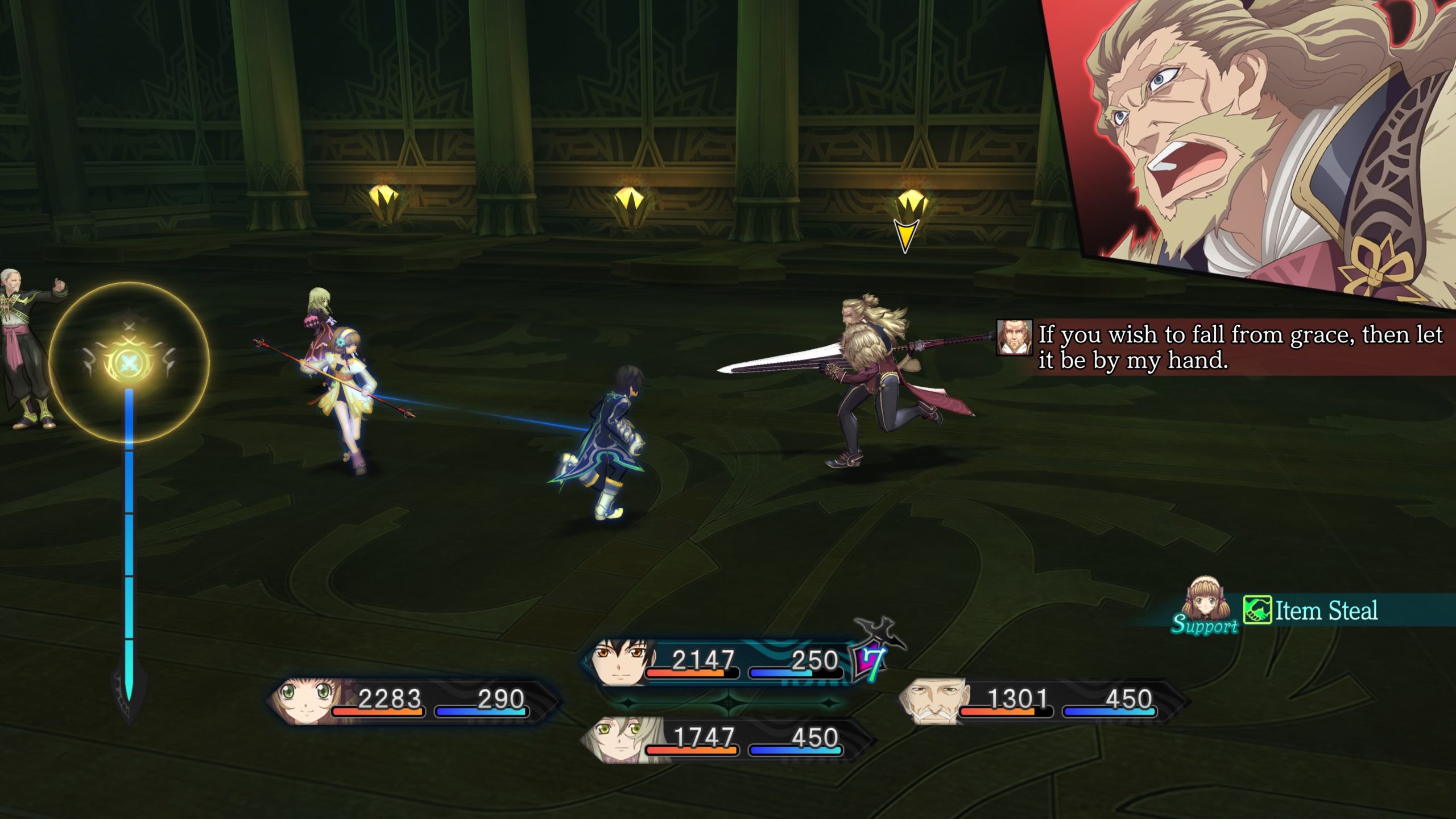
Gameplay-wise, Tales of Xillia builds upon the franchise’s signature Linear Motion Battle System and introduces the Dual Raid Linear Motion Battle System. It allows players to link two characters together for synchronized attacks and support skills. This linking mechanic adds great strategic options to battles. Each party member has a unique playstyle and a variety of weapon types, and battles are both satisfyingly fast and dynamic, while also being challenging.
Combat animations are crisp and responsive, especially in the remaster, running smoothly even with multiple enemies and effects on screen. Boss battles are some of the game’s highlights. They’re flashy and intense, often requiring smart use of artes and linked abilities to overcome. However, the game notably has a steep difficulty curve towards mid-game sections. This forces players to grind out levels and master combo timings to progress. While not too bad, the sudden shift can be jarring to many.
Despite this, playing Tales of Xillia has never been better thanks to the game’s new, much-needed quality-of-life changes. This includes an incredibly useful autosave function, the ability to dash, making gameplay faster and more approachable, and the ability to toggle encounters. Additionally, the game now allows players to skip dialogue lines, skits, and cutscenes. This is a significant enhancement from the original, as it had painfully slow dialogue scenes and skits. The remaster also grants access to the shop from the start, unlocking several features and providing money to purchase various useful items. Moreover, players can finally play the game with Japanese dub, which features excellent voice acting. Overall, playing Tales of Xillia is now something modern players can indulge in thanks to these features. The game also runs smoothly on PlayStation 5 with no noticeable framerate dips, lags, crashes, or glitches.
format(webp))
Enhanced, Remastered Visuals
Visually, Tales of Xillia Remastered looks better than ever. The game features cel-shaded character models and more expressive facial animations. The remaster provides the visuals a new coat of paint as almost everything looks genuinely HD, especially the animated cutscenes and opening. While the environments can sometimes appear sparse compared to modern RPGs, the art direction compensates with vibrant color palettes and many ethereal designs and elements.
However, Tales of Xillia Remastered isn’t without its rough edges. The pacing falters most noticeably in the middle stretch, where the momentum dips before building toward the finale. Side quests also struggle to impress, often falling into repetitive fetch tasks or simple monster hunts that lack the creativity seen in stronger entries of the series. And although the remaster cleans up the visuals, the character models clearly betray the game’s age, giving some scenes a distinctly dated look. The English voice acting suffers a similar fate. While earnest and often well-delivered, the audio fidelity reflects an era of more limited recording technology, making it sound noticeably older compared to modern standards.

Final Thoughts
Even so, these issues don’t outweigh what the remaster gets right. At its core, Tales of Xillia Remastered remains a heartfelt and engaging JRPG, filled with the emotional storytelling, memorable characters, and exhilarating combat that long-time fans cherish.
In the end, despite its imperfections, Tales of Xillia Remastered stands strong more than a decade after its original release. It’s a vibrant, character-driven adventure that offers plenty for genre enthusiasts to enjoy, reaffirming why Xillia holds a special place in the Tales series legacy.
The Review
Tales of Xillia Remastered
PROS
- Great characters
- Fun fast gameplay
CONS
- Dated models
- Odd difficulty spikes