

TL;DR
- Deadlock and Dota 2 share core MOBA mechanics like lanes, objectives, item scaling, and team roles, making Deadlock feel like Dota’s third-person spiritual successor.
- Deadlock is faster-paced and action-heavy, while Dota 2 offers deeper strategy and a polished, complex gameplay refined over two decades.
- Dota 2 dominates in content variety, from game modes to esports, but Deadlock’s rapid updates keep it fresh and experimental.
- Deadlock is a great alternative for Dota players seeking something new without leaving the core MOBA experience behind.
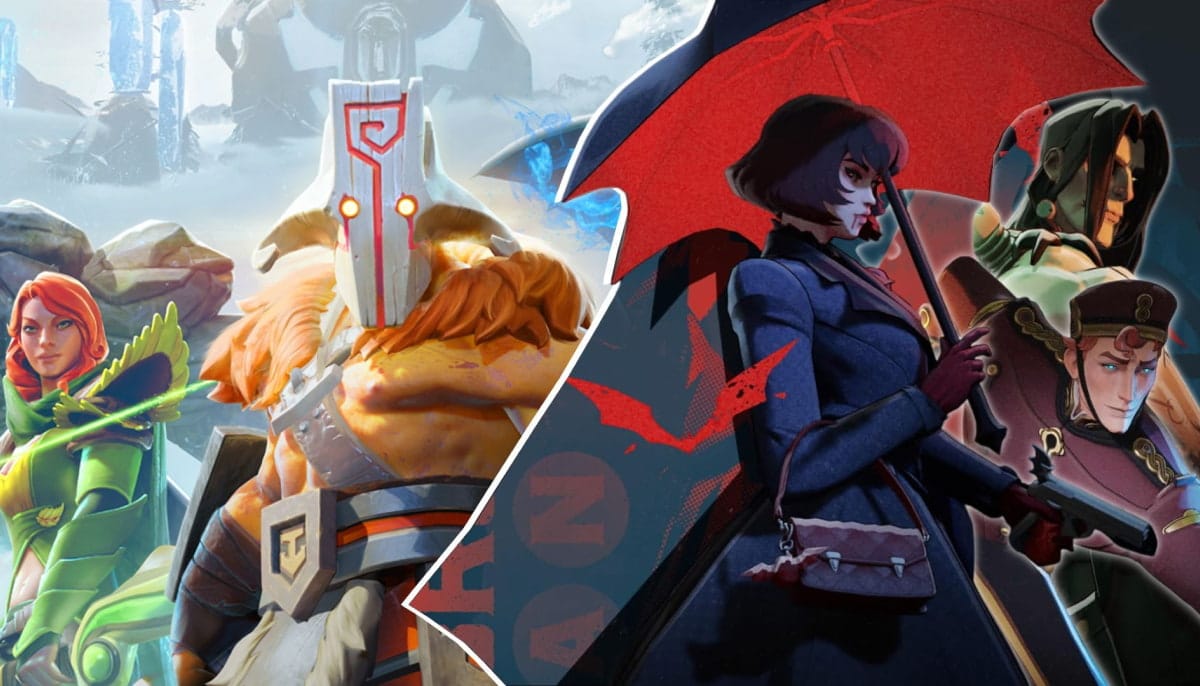
The original Dota is considered the pioneer of the MOBA genre, having been a mod of Warcraft III at the time. Two decades later, Dota 2 is still one of the best MOBA experiences right now, if you can get through its notorious learning curve.
Deadlock is Valve’s newest IP, and rumour even has it that the legendary IceFrog (lead developer of Dota and Dota 2) is overseeing the project. Because of this connection, the third-person MOBA shooter has so much in common that it’s regarded as Dota’s spiritual successor, translated into another genre.
For this comparison article, it’s essential to examine how Deadlock and Dota 2 share many similar concepts before exploring how they differ across multiple categories for true MOBA enthusiasts.
Deadlock vs Dota 2: Gameplay
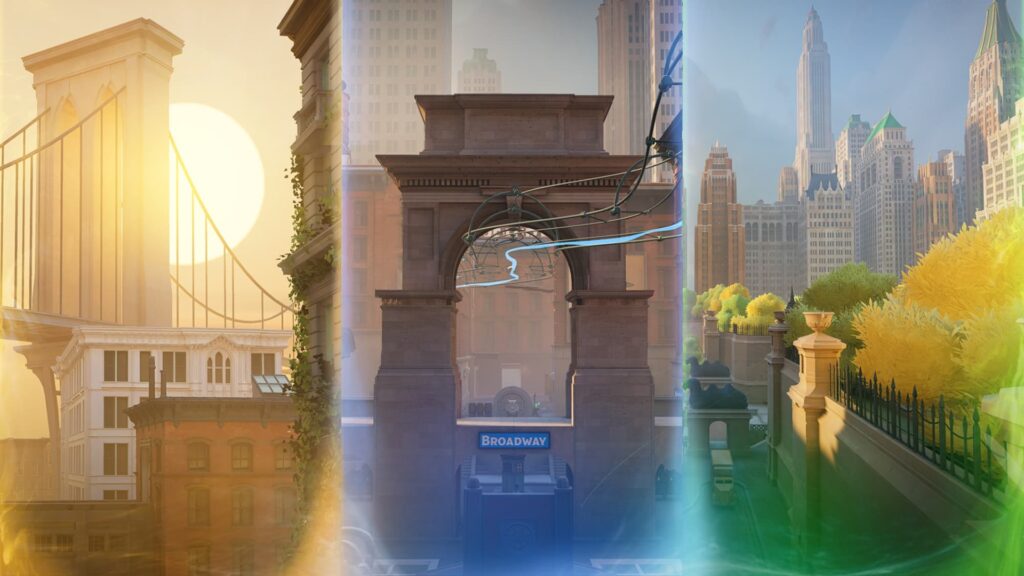
Starting from the early game, Dota and Deadlock both have active laning phases where players need to secure last hits, denies, and kills. But in Deadlock, Souls are shared during the laning phase, whereas in Dota 2, only players who get the last hit on the creep get the gold. This difference means that roles are clearly defined early on in Dota 2 with expected roles, cores, and supports, while Deadlock has an evolving meta without any standardised positions.
Both games have equivalent objectives, like Roshan to Mid Boss, towers, and Power Runes, but Deadlock adds more contested areas around the map to keep the mid-game flowing. Smaller objectives like Sinner’s Sacrifice and Soul Urn can add up quickly to the team’s economy, and tying item slots to destroying Guardians and Walkers incentivises teams to push earlier.
Unlike Dota 2, Deadlock’s jungle camps don’t spawn every minute, so it forces heroes to show up in the lane or invade. Meanwhile, Dota 2 has been expanding its map over the years, which can lead to multiple heroes farming uncontested for half the game. While teams could coordinate for invades, it’s often a safer strat to farm in your own jungle.
Deadlock and Dota 2 share the same philosophy regarding the power of items, and how it’s equally important to adapt with counter items rather than going for a static build every game.
Dota 2: 9/10
Deadlock: 9/10
Deadlock vs Dota 2: Game modes
Unfortunately, Deadlock and Dota 2 aren’t leading the industry or breaking new ground in this category. There was a time when Dota 2 had frequent events and game modes like Diretide and roguelite dungeon-crawler Aghanim’s Labyrinth, but they haven’t released a game mode to that calibre for years. Dota 2 did introduce several minigames during the Crownfall that you can play outside of regular gameplay.
Dota 2 has a few featured game modes in public matchmaking, like Ranked, All Pick, Ability Draft, and Turbo, that offer new rules and restrictions for the standard game. There’s also the Custom lobby finder if you really want to see wilder user-generated content. On top of that, Dota gives players a taste of the pro scene with the weekly Battlecup tournament, but it’s only available for Dota Plus members.
While Deadlock updates frequently, it’s dedicated to the only normal mode in the game and its heroes. For now, it’s barebones with only the essentials, and it doesn’t even have a separate queue for ranked. There are reliable rumours that an all-random, all-mid mode called Street Brawl is on the horizon and a roguelite variation of that mode, too.
Dota 2: 8/10
Deadlock: 6/10
Dota 2 vs Deadlock: Characters
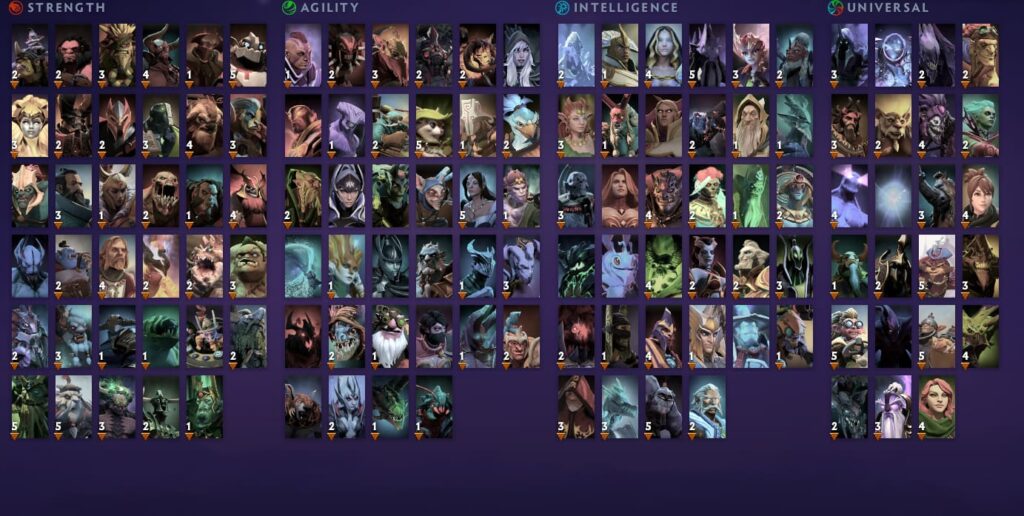
Both games also heavily emphasise macro decisions, but the micro skill ceiling varies the most in Dota 2. Dota 2 has 126 unique heroes, and none of them play alike. There are straightforward heroes like Sniper, who is easy to pilot with his two active abilities and auto-attacks at a distance, to the famous Invoker that creates spells on the fly by mixing elements.
Dota 2 is also faithful to its roots as an RTS game and includes many heroes who need to juggle several units, like Meepo, Arc Warden, Chen, and Brewmaster. Additionally, Facets, talents, roles, and item builds are more complex layers to change how they play.
As of November 2025, there are 32 playable Deadlock heroes dripping with style and personality, but players who come from Dota 2 can’t help but notice that there are many kits and concepts borrowed and reimagined from the game.
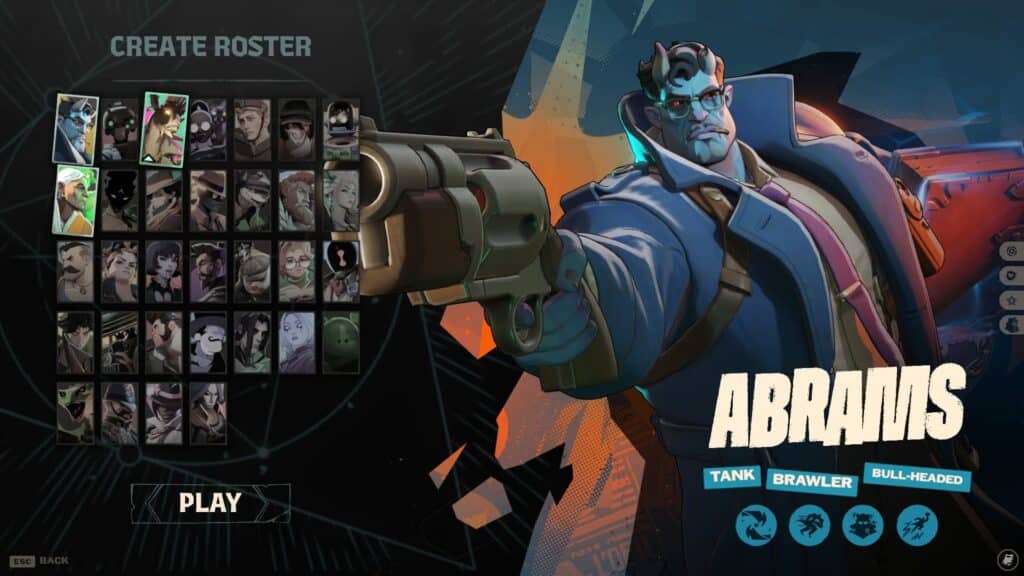
Regardless, the third-person view and emphasis on good movement bring a fresh feel to the MOBA, making heroes who utilise the new perspective, like Viscous and Lash, a joy to play. There’s also a higher skill floor to Deadlock since players will need to master the basic actions, like accurate shooting and good movement for all characters.
Regarding lore and personality, these are both Valve games and thus benefit from the stellar worldbuilding in and out of the server. Dota and Deadlock have top-tier voice acting, fun hero interactions, dynamic barks, which make the game feel more interactive, and bonus external media to further flesh out the characters. Dota 2 even has a show on Netflix called Dragon’s Blood, and some original characters there, like Marci, made it back into the game.
Deadlock is newer but already has a mystery visual novel in the works, with some leaks posted online. So far, the game has really knocked it out of the park with its world-building of an occult 1950s New York and often morally grey cast.
Dota 2: 9/10
Deadlock: 10/10
Dota 2 vs Deadlock: Esports scenes
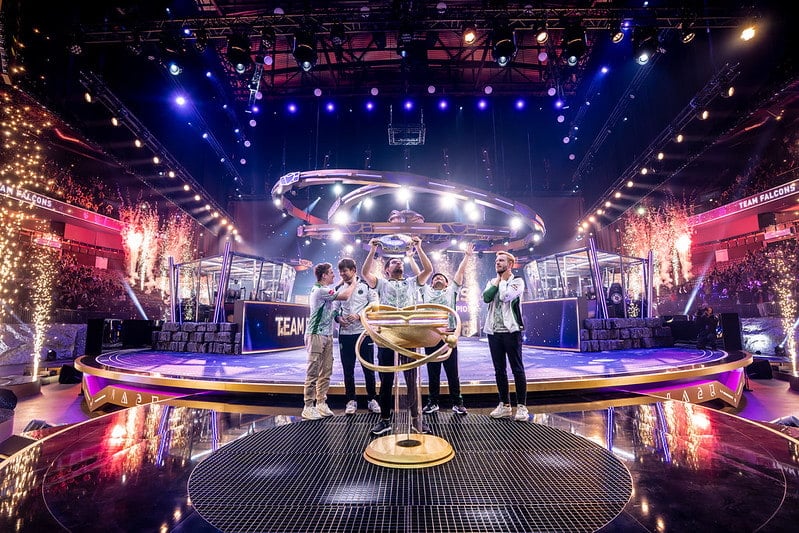
Dota 2 is one of the long-lasting pillars of esports ever since it shook the world with its $1 million prize pool for the first International back in 2011. While The International headlines Dota 2’s esports scene and serves as the conclusion of the professional season, there is no shortage of tier 1, tier 2, and amateur leagues to watch. If ever you want to see the pros duke it out, you can simply turn to the Watch tab in the client, and there’s almost always a tournament going on.
In contrast, Deadlock has no official tournament from Valve, but the grassroots scene is extremely active. Deadlock Night Shift provides a weekly battleground for the best teams, and Death Slam has even organised the game’s first LAN event. The foundation is there whenever Deadlock goes public and decides to start formally supporting its esports scene.
For spectators, Dota’s top-down view and polished engine make it easy to see most action, where even spectators can follow the big, cluttered teamfights. Meanwhile, Deadlock’s third-person camera makes the screen feel busier and struggles with readability. Marvel Rivals and Overwatch 2 also suffer from the same problem, and hopefully, Valve can think of a way to innovate on that front.
Dota 2: 9/10
Deadlock: 6/10
Dota 2 vs Deadlock: Developer support
Dota 2’s support is steady, albeit glacial, when it comes to pushing updates and patches. Every numbered patch is a big deal for the game and usually shakes up the meta and map while introducing new mechanics, but the gap between each takes up months. Instead, smaller lettered patches act as hotfixes to keep the game balanced in between these larger updates.
Unfortunately, Dota 2 suffers from the same sickness as Counter-Strike, where Valve rarely gives the game events to keep players engaged between matches. Crownfall was one of Dota 2’s best events and a great narrative experiment, but ever since that ended, it’s been empty.
Ironically, one of the main reasons why Dota 2 and CS2 (don’t even mention TF2) are seeing less activity is because of Deadlock. As Valve’s latest baby, Deadlocks’ updates are aggressive and experimental, which is refreshingly fast for Valve’s time.
New heroes, reworks, and massive overhauls are delivered around every three months, and the dev team is communicative about the changes. This burst of attention makes Deadlock feel like a live game in the truest sense, where feedback loops are short and dev response times are tight.
Dota 2: 8/10
Deadlock: 9/10
Verdict
| Category | Dota 2 | Deadlock |
|---|---|---|
| Gameplay | 9 | 9 |
| Game modes | 8 | 6 |
| Characters | 9 | 10 |
| Esports scene | 9 | 6 |
| Developer support | 8 | 9 |
| Total | 43 | 40 |
From first impressions, Deadlock and Dota 2 may look worlds apart, but they’re different takes on the same ideas and even share many of the same talented developers working on them.
Dota 2 remains unchallenged as a pure and more complex MOBA, where even the most grizzled vets are still learning its nuances. But Deadlock’s fresh perspective and snappier pace are still able to deliver the layered MOBA experience in a different light.
Dota 2 has two decades of refinement and still remains innovative, and therefore comes out on top in this head-to-head, 43 to 40. However, Deadlock is the perfect game to switch things up, while keeping concepts familiar, but with novel action.
FAQs
How similar is Deadlock to Dota 2?
Deadlock shares many concepts with Dota 2 that it feels like its spiritual successor. Core systems like laning, objectives, and item-based power scaling are presented in a familiar but new light in Deadlock.
Is Deadlock better than Dota 2?
Not necessarily, it depends on what you want. Dota 2 has deeper strategies with RTS roots, while Deadlock is faster, action-focused, but still requires good macro decisions.
Is Dota 2 declining in popularity?
No, Dota 2 is still one of the most played games on Steam and peaked at around 860,000 players this October 2025 and 833,114 for November. In comparison, Deadlock’s player count peaked at over 170,000+ players, but retains a core of 20-40K players online monthly.
The post Deadlock vs Dota 2: Which Valve MOBA has more to offer? appeared first on Esports Insider.